About Me
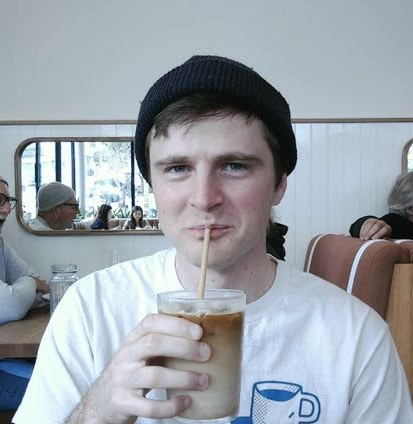
Hello! I’m Raymond Bukaty, but everyone calls me Buck (he/him).
I’m a software engineer by trade, but recently I’ve been exploring career options related to trading card games and tabletop gaming. I’m currently the Organized Play Lead at a Gamelandia, a lovely game store in the Bay Area.
Check out my resume, or feel free to shoot me an email at hello@buckbukaty.com.
My Projects
These are some of the projects I’ve worked on for classes, internships, or for fun.
For professional skills, check out my resume.
Magic: the Gathering Artisan Standard Format
I love Magic deck-building. For a long time the “Standard” constructed format, where you bring your best deck using only cards released within the last 3 years, was a premier competitive Magic format at hobby shops across the country. Unfortunately, Standard decks have slowly become prohibitively expensive, and as a result competitive constructed has never been popular at Gamelandia.
I wanted to make deck-building accessible for my community, so I pioneered a new way to play: Artisan Standard, where the same deck-building rules apply, but you can’t use cards above the “Uncommon” rarity. This format has reinvigorated constructed Magic at my store, with a consistent weekly playerbase excited to try out new decks that they’ve created just for my Artisan League.
To hear about some of those cool decks, check out this excellent article about Artisan Standard at Gamelandia by my friend Abhi. (link)
Stillman Lab Data Analysis Contributions
During the Spring semester at San Francisco State University I worked with Dr. Jonathon Stillman and a group of talented graduate students on a review paper, Ecophysiological Responses to Heat Waves in the Marine Intertidal Zone.
Dr. Stillman wanted to know if it might be possible to use publicly available datasets to identify seasons and locations where low tide and peak sun exposure co-occurred, and how those factors contribute to intertidal heat waves. I began attending weekly class sessions and writing code to investigate this.
Using my background in data science at Stanford to work on a project with implications for conservation efforts was exciting, and I created a model of intertidal temperatures that compared very convincingly to recorded temperature data from a site on the California coast.
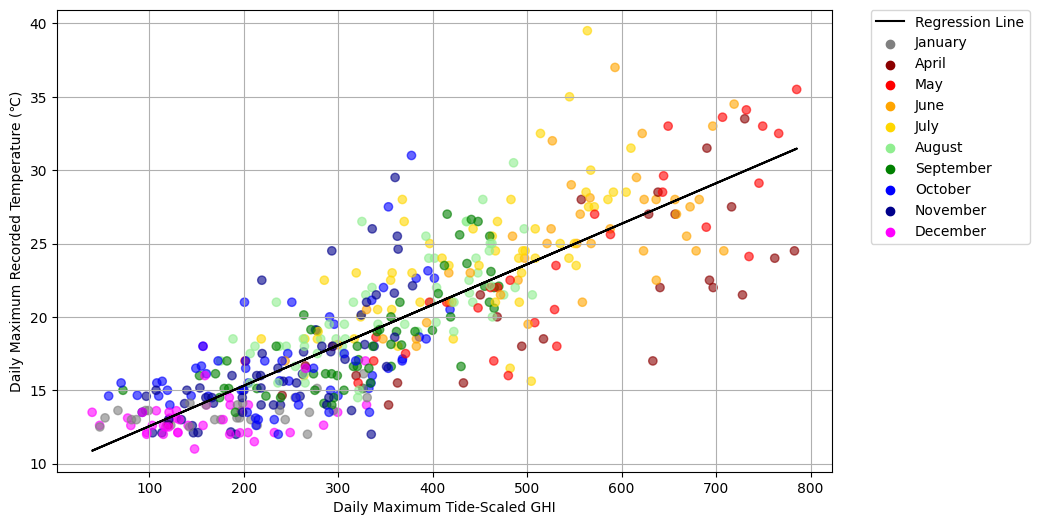
Dr. Stillman was excited to include this result in the paper, which was recently published in the Journal of Experimental Biology! (Volume 228, Issue 2)
Code notebook viewable in the project repository.
Nonograms
I was introduced to nonogram puzzles recently, and they reminded me of the kinds of problems you encounter on algorithm practice sites.

It seemed like it would be fun to build a nonogram solver from scratch, so I intentionally didn’t look up any existing approaches and dove into the problem. In the process, I also ended up building a web scraper for a large online nonogram puzzle database to test my algorithm against.
I ended up with a pretty competent solver that only got stuck on inferences that weren’t obvious to me as a human (though I’m definitely a nonogram novice). It solved 87% of the ~4000 puzzles I scraped.
Here’s an animated example of a large, complex puzzle it was able to solve:

More info and examples in the project repository.
KanjiMorph
As I studied Japanese kanji characters, I wanted to make an art project involving kanji. I imagined them flowing between each other with “living” strokes.
So, here’s KanjiMorph! It’s a custom animation algorithm I wrote that morphs between kanji characters by moving their individual strokes. To see it in action, look below for some of the kanji I was studying as I worked on the algorithm!
Additional demo here.
April 2023

SpiritForge
SpiritForge is a web tool I made with a friend to streamline the process of making custom content (cards and spirits) for the board game Spirit Island.
Check it out here.
2022

Generative Art
I had a lot of fun taking a class called Drawing with Code at Stanford, and since then I’ve been inspired to make more generative art.
Recently I bought an Axidraw pen plotter, which I’ve been able to use to create some very unique paintings.
Album here.
Ongoing

VG-Relations
I made a neat visualization of Ranjay Krishna’s “Visual Genome” dataset while I was interning with him at the Stanford Vision and Learning Lab.
Check it out here.
Summer 2018

CoNBot
Worked with a project partner on an AI game-playing agent for the game Crypt of the NecroDancer as my final project for CS231N: Convolutional Neural Networks for Visual Recognition. I wrote a nice summary article about what we did, which links to the code and our report+poster.
Check it out here.
Spring 2018

Laser Lair
A 3D puzzle game about using robots to get through a booby-trapped puzzle lair, made for CS248: Interactive Computer Graphics.
Check it out here.
Winter 2018

Boundless Mind
I was a web dev intern at early stage company Boundless Mind, and I designed and constructed a web-based Business Intelligence dashboard for the sales team.
See a sample.
Summer 2017
SplatterVR
As a freshman, I participated in Stanford TreeHacks with 3 friends. We built a simple, fun VR experience for the HTC Vive in which you splatter paint around a massive white room.
Check it out here.
Winter 2017